


Imagine a world where your unique health blueprint guides every treatment you receive. Precision medicine uses your genes, lifestyle, and surroundings to tailor care just for you. It’s like having a trusted guide who shapes your treatment to fit your needs perfectly.
Smart tools, like computer programs that quickly sort through data, and new ways to fix gene problems are making this care more personal every day. In this article, we explore how these innovations work together to boost personalized care for everyone.
Precision Medicine Technology: Overview and Foundational Innovations

Precision medicine technology tailors treatments just for you by looking at your genes, surroundings, and lifestyle. For an easy-to-understand definition, have a look at what precision medicine is at https://factcheckx.com?p=2495. It brings a personal touch to everyday health care, making your treatment as unique as you are.
Artificial intelligence is key in this field. It speeds up how quickly we can analyze complex sequencing data and helps shape smart treatment choices. Fun fact: before Marie Curie became famous, she even carried radioactive test tubes in her pockets, showing how one unexpected detail can change everything, much like AI changes our view of healthcare.
Breakthroughs in mRNA technology, like Pfizer’s Comirnaty vaccine in August 2021, have made a big difference in both cancer research and fighting infections. This innovation not only quickened drug development but also broadened the path for personalized treatments in many health areas.
Then there’s CRISPR-Cas9 gene editing, a true game changer. By allowing very precise fixes for single-gene disorders, its FDA approval at the end of 2023 set new standards. Experts even predict that global sales could reach $593 million by 2029.
Digital health solutions, like those at https://ourmobilehealth.com?p=176, pull everything together. They combine data from many sources to keep your care prompt, effective, and genuinely personal.
Precision Medicine Technology: Genomic Sequencing and Bioinformatics Integration
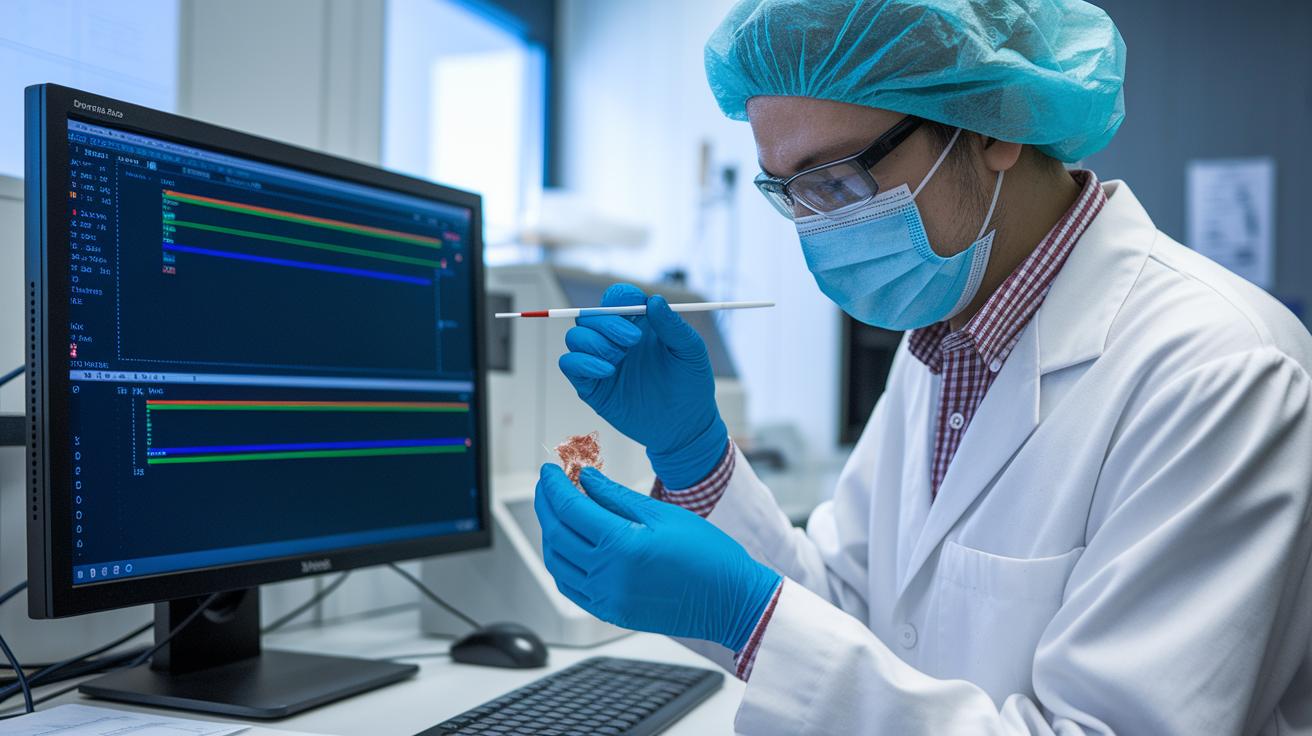
Next generation sequencing tools have truly changed how we look at personalized care. These amazing techniques help us examine small samples from tissues or blood easily. In fact, targeted sequencing for tissue or liquid biopsies gives us a closer look at your health data. We can now run whole-genome tests or use panel-based methods on fresh or frozen samples that match a blood sample, making health testing very detailed.
Then there are cloud-based health platforms and big data tools that back up these tests. They use computational genomics pipelines that work with huge amounts of sequencing data, which makes spotting gene changes a lot faster. This means that raw data turns into clear, helpful diagnostics. In short, mixing next generation sequencing with smart bioinformatics gives us a strong system for precision medicine and personal care.
| Platform | Throughput | Primary Application |
|---|---|---|
| NGS-X | High | Tissue Biopsy Profiling |
| SeqPro | Medium | Liquid Biopsy Analysis |
| GeneScan | Low | Panel-Based Genomic Testing |
- DeepVariant helps find gene changes with better detail
- GATK works hard to process all the data reliably
- VarScan takes a close look at copy number and mutations
- FreeBayes offers a flexible way to call variants
Precision Medicine Technology: AI and Machine Learning Applications

Artificial intelligence is changing the way we understand and treat illnesses. Tools like Tempus and Foundation Medicine check tissue and blood samples to find cancer changes really fast. They even suggest drugs that fit a person’s unique genetic makeup. Pretty cool, right?
Machine learning is another big part of this journey. Digital pathology systems use smart models to speed up how images are reviewed so doctors can spot odd cells that might be missed. This not only makes diagnoses clearer but also helps lab teams do their jobs easier. And machine vision adds simple, clear visuals to help catch problems early on.
Then there are algorithms that look at a patient’s genetic risks to match them with the best clinical trials. They help make sure that people get into studies where the treatment fits their genetic profile. In real time, these predictive tools help guide doctors to choose the best treatment options.
In short, mixing AI with machine learning means our decisions come from solid data, leading to faster and more effective treatment choices that feel truly personalized.
Precision Medicine Technology: CRISPR-Cas9 and mRNA Therapeutic Innovations

CRISPR-Cas9 is a breakthrough tool that fixes genes with great accuracy. In late 2023, the very first CRISPR medicine received approval from the FDA, sparking hope for treating single-gene disorders. Experts even predict that CRISPR treatments could generate nearly $600 million in sales by 2029. At the same time, mRNA technology is growing fast. Pfizer’s Comirnaty vaccine, which hit the market in August 2021, set the stage for more innovations. By 2023, the FDA had nearly doubled its designations for mRNA treatments compared to 2021. This progress means that treatments can now be made quickly, tailored to each person’s needs.
| CRISPR-Cas9 Advantages |
|---|
| Fixes genes with precision |
| Offers hope for lasting cures |
| Saves time in developing treatments |
| Creates more personalized therapies |
| CRISPR-Cas9 Challenges |
|---|
| May accidentally change other genes |
| Struggles with getting into cells effectively |
| Brings up ethical concerns |
| Costs for research are very high |
mRNA technology also comes with its own strengths and hurdles. Its fast production capabilities have revolutionized vaccine and treatment development, especially useful when facing new health challenges. However, mRNA treatments need careful cold storage and more research on long-term stability. They sometimes trigger extra immune responses and call for better cost-cutting in manufacturing.
| mRNA Technology Advantages |
|---|
| Enables rapid vaccine and treatment production |
| Quick to adjust to new health threats |
| Proven effective with large groups |
| Offers flexible and scalable therapy options |
| mRNA Technology Challenges |
|---|
| Requires strict cold storage conditions |
| Lacks long-term stability data |
| May cause unwanted immune responses |
| Needs cost-effective production methods |
Precision Medicine Technology: Clinical Informatics and Digital Health Platforms

Digital platforms now bring together clinical, lab, and regulatory details to boost personalized care. They support every stage, from early testing to full clinical trials, making it easier for teams to track progress and adjust treatments quickly.
Smart tools like Precision 360° Intelligence, Agent Intelligence, and Sample Intelligence work with improved electronic records. They pull in information from many sources right away. This means doctors can check lab results, monitor key markers, and even look at protein details in real time. In short, these systems offer clear guidance so that treatment choices are made using reliable data and a focus on the patient.
Cloud-based health platforms are a big deal too. They connect people globally and support remote trials and specialized testing tools. Imagine a reminder that tells you it’s time for a follow-up or alerts your doctor when something changes. This hands-on approach fits perfectly with today’s trend of systems that work smoothly together.
When digital platforms back up electronic records and clinical info systems, work becomes simpler and decision help is always at hand. Lab data, rules, and patient updates come together naturally, empowering teams to manage tough trials without delays. This blend of modern tech shows just how easy and efficient personalized care can be.
Precision Medicine Technology: Case Studies in Oncology and Rare Disease Applications

For over 25 years, our teams have been fine-tuning the way we handle samples in early cancer research. They learned to manage each sample with care and cut down on common risks, which has made clinical trials run much smoother, even when a small mistake could slow things down. One study, for instance, showed that careful handling of tissue and blood samples made biomarker results clearer, giving researchers a better look at each patient’s unique profile. Pretty cool, huh? It really shows how turning careful work into smart insights can change the game.
Now, labs are using extra immune monitoring methods like flow cytometry (a tool that tracks how cells behave), ELISpot, and cytokine profiling. This means they can watch how cells react in real time. With these solid data points, trials that rely on biomarkers have the strong backing they need for success. Researchers have seen this firsthand, advanced lab techniques have helped tailor treatments not just for common cancers, but for rare diseases as well. In one trial, these methods helped fine-tune treatment plans, boosting patient response rates while keeping the trial running smoothly.
This impressive work even earned the team the 2025 Fierce Biotech CRO Award for Innovative Solutions in Drug Development. It’s a well-deserved nod to the hard work both on the lab bench and out in the field.
- Streamlined sample management that reduces risks and boosts data accuracy
- Advanced lab techniques that bring clarity to immunoassays
- Focused clinical trial teams working on a few studies at a time
- Award-winning operational excellence that sets industry standards
These real-world examples show that precision medicine isn’t just about science, it’s about transforming patient care for the better.
Final Words
In the action, we explored how precision medicine technology is shaping modern healthcare through personalized treatment and smart digital integration. We saw AI boost analysis speed and support clinical decisions, while breakthroughs in CRISPR-Cas9 and mRNA offer fresh therapy options. Digital health platforms give access to reliable insights and trusted patient support. Every step reflects an exciting move toward a more secure and personalized future in healthcare.
FAQ
What does precision medicine use?
Precision medicine uses tailored treatments based on an individual’s unique genes, environment, and lifestyle. This approach is applied in cancer care, chronic conditions, and rare diseases for more precise, patient-specific therapies.
How does precision medicine work?
Precision medicine works by gathering genetic, environmental, and lifestyle data to identify the best treatment for each individual. It uses advanced tools like genomic sequencing and artificial intelligence to guide decisions.
What are the benefits of precision medicine?
The benefits of precision medicine include more personalized care, improved treatment effectiveness, and reduced side effects. By matching therapy to a person’s unique makeup, it aims to offer quicker, more targeted results.
What are some examples of precision medicine?
Examples of precision medicine include targeted cancer treatments, mRNA vaccines like Comirnaty for infections, and gene editing therapies using CRISPR-Cas9. Each example shows how treatments can be customized for individual needs.
What are the side effects of precision medicine?
The side effects of precision medicine vary with treatment type. While some therapies might cause reactions similar to conventional drugs, the personalized approach generally aims to minimize adverse effects.
What does precision medicine mean?
Precision medicine means tailoring healthcare based on a person’s genetic profile, environment, and lifestyle. It aims to provide treatments that directly address individual differences to improve health outcomes.
How is artificial intelligence used in precision medicine?
Artificial intelligence in precision medicine analyzes large health data sets to speed up diagnosis and refine treatment selection. It supports rapid genomic insights and efficient patient stratification for more precise care.
What is the Precision Medicine Initiative?
The Precision Medicine Initiative supports research that aims to develop individualized treatments. By integrating large amounts of data and innovative technology, it pushes forward the development of highly personalized healthcare options.
What is precision medicine technology?
Precision medicine technology refers to the tools and methods used to analyze genetic and health data for personalized treatment plans. It includes innovations like genomic sequencing, AI-powered analysis, and digital health integration from health tech solutions.
What are the 4 P’s and 5 P’s of precision medicine?
The 4 P’s of precision medicine focus on Predictive, Preventive, Personalized, and Participatory care. Some models add a fifth element to stress precision in treatment, reinforcing the tailored approach to healthcare.
Is Precision for Medicine a real company?
Precision for Medicine is a recognized company in the personalized health field. It works on developing digital health solutions and precise treatment methods, contributing solid expertise to this advancing healthcare area.