


Have you ever noticed how your smartwatch might soon work like your personal doctor? The Internet of Things, which connects everyday devices like smart sensors with hospitals, is speeding up care in a really cool way. In 2023, the market hit billions, and experts say it's only going to grow even more.
Your gadget now tracks your vital signs in real time and sends that info straight to your doctor. This means health checks get done faster while feeling a lot more personal and caring. It's a small change that feels like a big step forward in the way we take care of ourselves.
IoT in healthcare Elevates Medical Innovation

In 2023, the global IoT in healthcare market was worth about $139.74 billion, and experts expect it to reach roughly $822.54 billion by 2032. That’s a huge jump! It shows how digital health solutions and wireless care systems are quickly changing how we take care of our health. Smart hospitals and internet-enabled innovations are making it easier to collect and use data, which means more efficient, patient-focused care.
Wearable sensors and implanted devices are leading the way by tracking things like body temperature, blood pressure, and body-fat percentage in real time. These gadgets work smoothly with electronic health records, cutting down on manual data entry. This steady flow of information helps doctors get the right insights faster, making remote assessments simpler and our overall medical system more responsive.
Take Mount Sinai’s Heart Health program, for example. By remotely monitoring blood pressure and weight, they managed to drop readmission rates from 23 percent to 10 percent. This shows how reducing manual data work and using smart technology can help doctors make quick, informed decisions. In truth, such advancements in patient data collection can really boost how clinics and hospitals deliver care.
Critical IoT Applications in Patient Monitoring
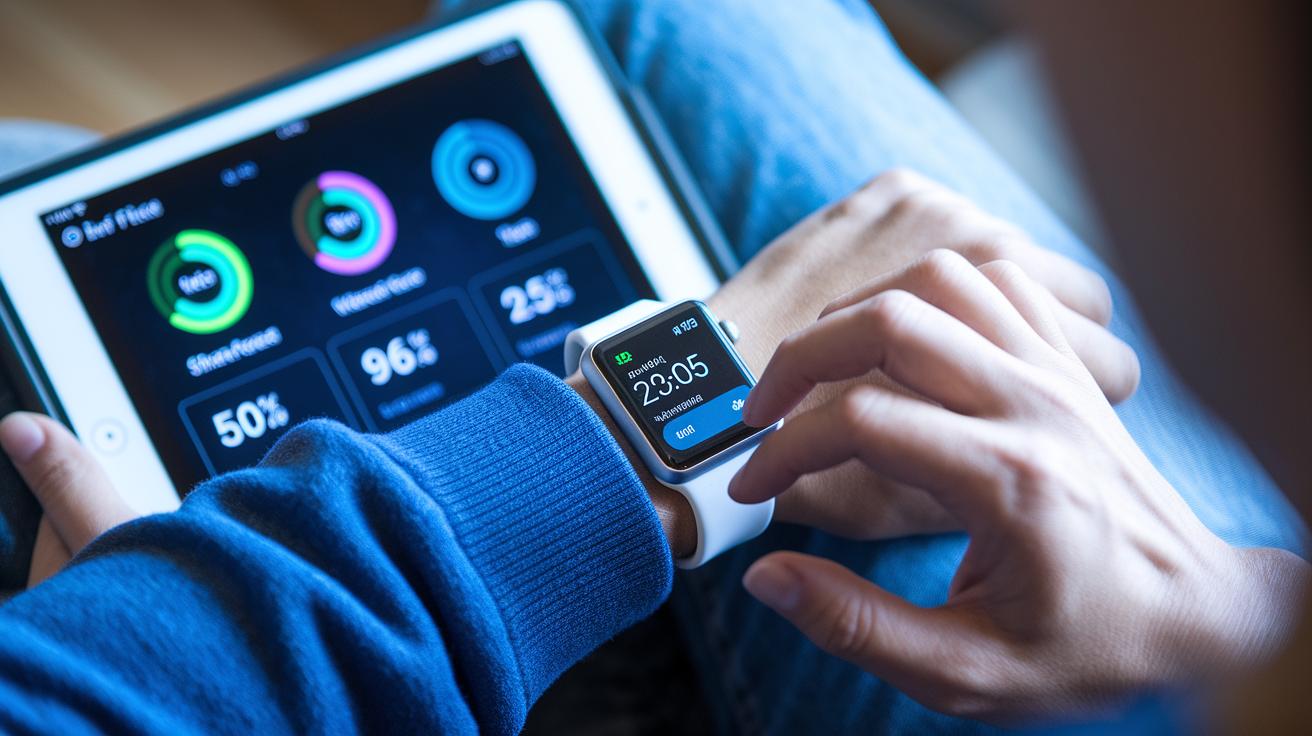
Remote monitoring is truly changing the way we look after our health. Smart gadgets like wearable sensors and smartwatches (just like those at OurMobileHealth.com) keep track of your heartbeat even when you're asleep. This means your doctor can get important updates about your health, even if you're not in a hospital.
But it's not just about heartbeats. There are devices that check your blood sugar and can prompt an insulin boost when needed. You also have connected inhalers that remind you to take your medicine, and hearing aids that adjust sounds to help you hear better. Each of these tools works in real-time to bring care right to you.
- Heart-rate monitoring
- Blood sugar tracking
- Temperature checks
- Inhaler reminders
- Hearing aid enhancements
- Sleep tracking
- Ingestible sensors
By gathering important health details from afar, these smart tools mean you might visit the hospital less often. They help catch any changes early, giving doctors a chance to tweak your treatment before things get worse. In truth, this steady flow of clear, reliable information makes it easier for your care team to create a more personal, safe experience for you.
Enhancing Diagnostics and Treatment with IoT-Connected Devices

IoT-connected MRI machines and infusion pumps are changing the way doctors work. MRI machines now give real-time information about how they are performing. They send helpful signals to technicians, so maintenance can be done before any issues come up. This means that during a scan, doctors can see clearer images and pick up on small changes they might miss otherwise. Infusion pumps have a similar smart upgrade. They let nurses and doctors adjust medicine delivery from a distance. For example, a pump might automatically change a dose based on continuous patient information, which helps keep treatments safe and on point.
Robotic surgery tools are another exciting part of this tech journey. These devices assist surgeons by reducing the chance of error during tricky operations. They make complex procedures a bit easier and more precise. Meanwhile, simple devices that remind staff to sanitize their hands work hard to keep infections down in busy hospitals. There are even smart contact lenses with built-in cameras and sensors that could spot early signs of disease by watching your eye in real time. All these connected tools team up to improve how we diagnose and treat, making decisions driven by clear data.
In truth, IoT-connected devices help health professionals deliver smarter, more reliable care every day.
Improving Hospital Operations and Asset Management with IoT

Hospitals are tapping into IoT tools to simplify everyday tasks. They use smart security cameras that quietly watch patient areas, catch anything out of the ordinary, and track how equipment moves. RFID tags, little smart stickers on things like ventilators and wheelchairs, help staff know exactly where each piece of equipment is. This means when you need something fast, a real-time locator guides you to the nearest device, cutting down on delays whether it’s an emergency or just regular work.
Then there are automated systems that adjust temperature and lighting on their own. This not only saves energy but also keeps everything comfortable for patients. Plus, with live updates of clinical data, hospital teams can decide quickly on the best care and how to share resources. It’s like having a backstage team that makes sure nothing falls through the cracks, so everything runs smoothly for both patients and staff.
In short, these IoT solutions make hospital routines simpler and boost safety and efficiency for everyone involved.
Security and Privacy Challenges of IoT in Healthcare

Many IoT health devices do not have strong security built in. Without proper protection, hackers can easily get access to important patient data. Even a simple gadget collecting your health details might be an open door for cyberattacks.
Sometimes sensors work the wrong way, batteries run low, or signals get scattered. This makes it hard for doctors to trust the numbers they see. When readings get mixed up, it can delay care when you need it most.
Wearable devices and implants collect lots of personal health information. This raises a big question: who really owns your data? Patients, doctors, and manufacturers often argue about data rights, especially when privacy laws are strict. Even a small mistake in how this data is handled can lead to serious problems.
To help with these issues, smart clinics use advanced risk tools and keep an eye on patient data all the time. They layer security and carefully control who can see the information, running regular audits, updating software, and locking down access. These best practices work together to keep your health data safe every day.
Implementation Roadmap for IoT Integration in Healthcare Settings

Imagine a simple plan that guides your healthcare IT team as they bring IoT technology into everyday care. This roadmap breaks the process into clear, easy steps so that the transition feels less overwhelming.
First, you assess your current systems, think of it as checking the tools already in your workshop (this might take 1 to 3 months). Then, move on to planning your goals, which helps keep everything on track (1 to 2 months).
Next, set up the network infrastructure. Picture installing the wiring in a new home; it can take 3 to 6 months. Following that, you ensure cybersecurity and meet compliance needs, protecting all that sensitive data (2 to 4 months).
After these steps, develop and test your IoT solutions. This is like trying out a recipe before serving it, it usually takes 6 to 12 months. Once you’re confident, you roll out the system on a larger scale, which could be another 3 to 6 months.
Finally, keep an eye on everything. Continuous monitoring helps you fine-tune operations and address any hiccups along the way.
In truth, successful IoT integration is built on a strong technical base. Robust 5G wireless communication, large-scale cloud computing, and advanced AI (that is, smart computers designed to check data accuracy) create a system that can handle a lot of real-time information. Your IT team should work hand-in-hand with vendors to see what upgrades are needed. Setting clear goals and carefully planning early on stops delays before they start. Plus, testing in controlled environments lets you fine-tune everything before the full launch.
Isn’t it amazing how a thoughtful plan can make a complex project feel manageable?
Future Trends Driving Growth of Medical IoT

Tech is racing ahead, and it's really shaking up how we manage health. We're now using 5G for real-time data streaming and faster edge computing, basically, getting the right info at the right time when it matters most. Smart algorithms are already hinting at problems before they turn serious, while tiny sensors make health tracking less invasive yet very accurate.
Robots in clinics are helping make procedures sharper and more precise. Plus, new biosensor wearables let us keep a constant, noninvasive watch over our health. All of these advances are building a more connected and efficient mobile health system.
Market experts are predicting big numbers ahead. Some say the healthcare IoT market could hit $289 billion by 2028 and jump to roughly $822.54 billion by 2032. This growth comes from a strong push for personalized treatments, with seamless data sharing thanks to common standards. Meanwhile, new rules are taking shape to protect patient info, and smart predictive tools are boosting both care and clinic efficiency.
Final Words
In the action, our discussion zoomed in on how IoT in healthcare transforms patient care. We touched on market trends, cutting-edge devices, and boosted diagnostics with smart tech.
We also explored wireless monitoring, operational improvements, security challenges, and a step-by-step integration roadmap. The blend of real-time data and modern tools paves a clear path for safer, more personalized care.
Every innovation moves us closer to effortless, high-quality health management, brightening the future of mobile digital healthcare.
FAQ
Q: What are some examples of IoT in healthcare?
A: The IoT in healthcare examples include wearable sensors that track blood pressure and heart rate, smart inhalers, RFID-tagged equipment, and connected devices that enable real-time patient monitoring.
Q: What do IoT in healthcare PowerPoint presentations include?
A: The IoT in healthcare PowerPoint presentations typically include market trends, core technologies, device types, impactful case studies such as remote monitoring programs, and overviews of streamlined clinical workflows.
Q: What topics do IoT in healthcare research papers cover?
A: The IoT in healthcare research papers cover market growth forecasts, device performance in real time, benefits to patient outcomes, security challenges, and implementation strategies for connected health systems.
Q: What information do IoT in healthcare PDFs contain?
A: The IoT in healthcare PDFs provide detailed insights into device categories, market analysis, case studies, and best practices for integrating wearable sensors, automated monitoring, and other smart technologies in medical settings.
Q: What kinds of IoT healthcare projects are being developed?
A: The IoT healthcare projects often focus on real-time vital tracking, remote patient monitoring using wearables, smart management of hospital assets, and interconnected devices that support enhanced treatment and diagnostics.
Q: What benefits does IoT offer in healthcare?
A: The benefits of IoT in healthcare include improved patient outcomes through continuous monitoring, reduced manual data entry, efficient asset tracking, and streamlined workflows that ultimately support quicker and more accurate clinical decisions.
Q: What are common IoT devices used in healthcare?
A: The IoT devices in healthcare include wearable sensors, smart inhalers, RFID-tagged equipment, interconnected imaging devices like MRI machines, and infusion pumps that deliver real-time performance data.
Q: What challenges does IoT face in healthcare?
A: The challenges of IoT in healthcare include vulnerabilities in device security, concerns over patient data privacy under regulations, potential sensor malfunctions, and issues like signal interference that can affect data accuracy.
Q: What are the four types of IoT systems?
A: The four types of IoT systems involve device-to-device connections, device-to-cloud communications, device-to-gateway frameworks, and back-end data sharing systems, each supporting different applications from personal monitoring to hospital asset management.