


Do you ever feel like work stress is weighing you down? You might be surprised to learn that you have more control than you think. Just five minutes of mindful breathing can clear the tension and help you get back on track. Imagine it as a little pause that smooths out the hard parts of your day.
In this article, I’ll share some simple, practical wellness tips to help melt away stress and bring a sense of calm. Stay with me as we explore small changes that can boost your well-being and help you feel great at work.
Key Wellness Tips for Managing Work Stress: A Complete Action Plan
Living well at work starts with caring for both your mind and body. When you set aside even a short five-minute moment for guided meditation, it's like hitting the reset button. Simple practices, like taking a few mindful breaths or pausing to reflect, help you stay calm throughout the day.
High work pressure can spike stress hormones, making your heart race and energy drain. A half-hour of gentle exercise and balanced meals packed with vitamins can really help refill what stress takes away. Try a deep breathing cycle: breathe in for five seconds, hold for two, and exhale for five. It’s a small ritual with big rewards. For more tips, check out stress relief techniques at work.
Smart scheduling can also ease your stress. Blocking off time for specific tasks, taking mini-breaks to stretch at your desk, and even earmarking moments away from screens can add pockets of calm to your day. Chatting with a friend or coworker might lighten the load too. These little steps help you manage deadlines and keep sharper focus when work gets hectic.
Mindfulness Wellness Tips for Managing Work Stress in the Office
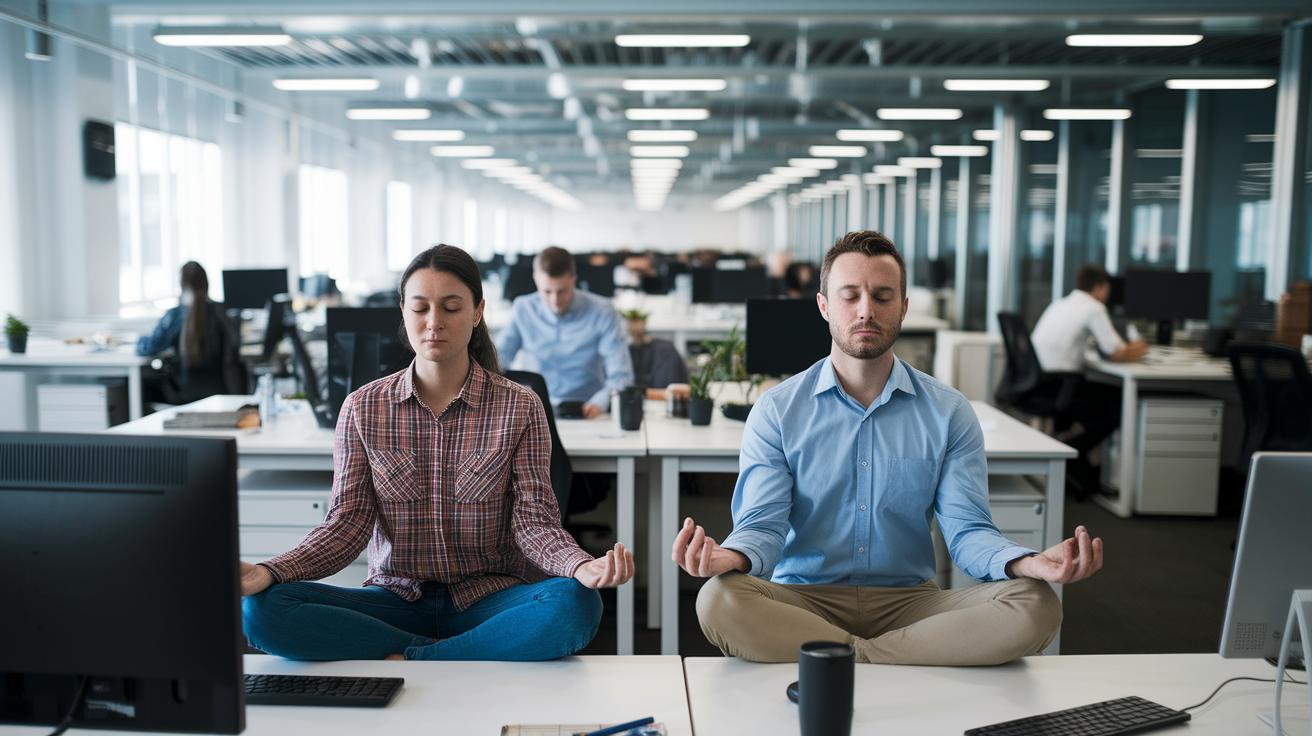
Mindfulness at work can really brighten your day. It gently soothes busy thoughts and eases everyday stress. Even a few minutes of guided meditation or a quick breathing exercise can change a chaotic schedule into something more balanced.
Think of it like a little break. Whether you need to clear your head between meetings or grab a pause during a hectic day, these short mindfulness moments help you feel focused and at ease.
- Five-minute guided meditation sessions
- A breathing cycle: breathe in for 5 seconds, hold for 2, and breathe out for 5
- A seated body-scan every 2 to 3 hours
- A quick pre-meeting micro-meditation (3 to 5 minutes)
- Visualization cues that spark images of calm
- Timer reminders to nudge you into a quiet moment
These simple steps can fit nicely into your work routine. By carving out little moments, whether it’s a five-minute meditation or a brief deep breath, you give yourself chances to reset and chill out. Sometimes, a mobile app set with gentle reminders can help you stick with these practices even on the busiest days. You might even check out resources like meditation for self care, which offer loads of guided practices made just for busy schedules.
Why not try a few different methods and see what works best for you? Enjoy watching your day slowly fill with calm and clarity.
Physical Wellness Tips for Managing Work Stress through Exercise and Nutrition
When workdays get hectic, even a few minutes of movement at your desk can boost your energy. Try a brisk walk or a few simple stretches for your shoulders, back, and neck. These quick moves can help ease stress and set a positive tone for your day.
It’s also important to plan your meals, especially when stress drains your body of vital vitamins like A, B, C, and E. Eating a balanced diet filled with fresh fruits, vegetables, whole grains, and lean proteins gives your body the fuel it needs. It’s like giving your body the right kind of energy from your cup of morning coffee until that much-needed lunch break.
Don’t forget to drink enough water. Keeping up with about 64 oz of water a day can make a big difference. Staying hydrated not only refreshes you but also keeps your mind sharp during long work hours. Sometimes, a sip of water is all it takes to fight off that familiar post-stress fatigue.
Try to build easy daily habits that boost your body and brain. A brisk walk in the morning, regular desk stretches, and ending your day with a calming routine can truly work wonders. Next, you might find these small rituals helping you feel more balanced and ready to tackle whatever the day brings.
| Activity | Time | Stress-Benefit |
|---|---|---|
| Brisk Walking | 30 Minutes | Boosts energy |
| Desk Stretches | 2 Minutes | Reduces tension |
| Mindful Break | 5-10 Minutes | Clears the mind |
Time Management Wellness Tips to Prevent Work Stress Buildup

When work starts to pile up, it really helps to decide which tasks need your attention right away and which ones can wait. Recent studies show that taking even short breaks from your phone or computer, like turning off extra notifications, can reframe your mindset and help you sort tasks more clearly.
Try mixing some of these simple techniques into your day:
- Use time-blocking to focus on important tasks.
- Do quick desk stretches to loosen up your shoulders, back, and neck.
- Step away for a 10-minute break without screens.
- Try guided muscle relaxation: tense each muscle group for 5 seconds, then let go for a deep sigh of relief.
- Close your eyes and picture a quiet lake with soft ripples, letting your stress melt away.
- Enjoy a mindful snack break where every bite helps you refocus.
Setting realistic time goals and clear expectations can stop overload before it starts. Adding short digital breaks into your routine makes it easier to stay calm and steady. For more fresh ideas, check out office wellness routines for busy professionals.
Workspace Wellness Tips for Managing Work Stress with Ergonomics
Start by making your workstation work for you. Adjust your chair so your feet rest flat on the floor and your knees form a clean 90-degree angle. Set your monitor at eye level to help avoid neck pain, and use a lumbar cushion if it feels right. Keeping your desk tidy not only cuts down on distractions but also eases visual stress.
Next, add a few personal touches to create a sense of calm. A soft lamp or a small plant can brighten your space and lift your mood. I once heard a coworker say, "I cleared away extra papers and added a tiny potted succulent, it turned my workspace into a cozy retreat." Have you ever noticed how even a small change can make your day feel lighter?
Now, think about how you can make your whole office a peaceful place. Simple ideas like setting up calm zones or quiet rooms give everyone a break from the daily buzz. With soft lighting and neat layouts, a busy office can feel like a little oasis. For more quick ergonomic and desk tips, check out this link on quick wellness routines for busy lifestyles.
Communication and Social Wellness Tips for Managing Work Stress

Sometimes it helps to talk about work stress with a friend, coworker, or family member. Sharing your struggles can lift a bit of the weight off your shoulders and remind you that you're not in this alone. Joining a mentoring group or an employee care program can also offer a friendly space to swap stories, trade tips, and even spark fresh ideas to handle tough days.
Keeping work and family separate really makes a difference. When you set up family-friendly routines and clear boundaries at home, life feels a bit more organized and less overwhelming. A few kind words to yourself can boost your spirit, try listing three small wins every day to remind you of what you do well.
Sometimes, a quick pause can work wonders. Have you ever taken a deep breath and just let it all go, or even spent a moment appreciating something nice? Those little breaks help lower anxiety and refresh your outlook, even on a busy day.
Advanced Wellness Tips for Managing Work Stress: Relaxation Techniques and Journaling
Guided Muscle Relaxation
Try this friendly exercise. Sit or lie down and gently tighten each muscle group from your head to your toes for about five seconds, then slowly let go. This little action helps pull your mind away from work stress. I remember how, with every release, it felt like the tension just melted away, leaving a calm space inside.
Visualization Technique
Next, find a quiet moment and picture a calming scene, a peaceful beach, a quiet lake, or a sunny field. Spend 5 to 10 minutes taking slow, deep breaths as you visualize every detail of that spot. Imagine the gentle sound of waves or the rustle of leaves, and feel the stress drift off.
Reflective Journaling
Consider writing about your day. List three moments when you felt stressed and note how relaxation techniques helped or might help you cope. You can also rate your feelings on a scale of 1 to 10 to track your progress. For example, after a tough deadline, I once noticed my stress level dropped from an 8 to a 5 after a few deep breaths and muscle relaxations, and writing it down made the difference clear.
Final Words
In the action, we've explored holistic wellness strategies and professional self-care habits, featuring guided meditations, steady breathing routines, and mindful nutrition to ease daily tension. Small breaks and ergonomic tweaks were highlighted to reduce stress and boost overall comfort at work.
We covered practical techniques, from scheduled desk stretches to meaningful conversations, that combine physical, mental, and social care. Stay positive, experiment with simple changes, and keep these wellness tips for managing work stress in your routine.
FAQ
What are 5 effective ways to manage stress in the workplace?
The 5 ways to manage stress in the workplace include short guided meditation, a deep-breathing cycle, quick desk stretches, clear scheduling, and open talks with peers to promote calm in busy times.
What are 10 ways to reduce stress at work and creative techniques for workplace stress management?
The 10 ways to reduce stress at work mix mindful breathing, minute-long meditations, scheduled exercise, healthy snacks, brief desk stretches, and creative, practical breaks that boost relaxation and work energy.
How should you approach stressful situations during a work interview?
The approach to handle stressful work interview questions is to explain using quick mindfulness techniques, effective time management, and honest communication about your self-care methods to stay composed.
How can I best deal with work stress and anxiety?
The advice on dealing with work stress and anxiety is to use deep-breathing exercises, short periods of physical activity, balanced nutrition, regular hydration, and open conversations for added support.
Where can I access a PDF on stress management at the workplace?
The PDF on stress management at the workplace offers a detailed guide on tactics like guided breathing, brief exercises, and ergonomic tips, available through online health resource centers.