
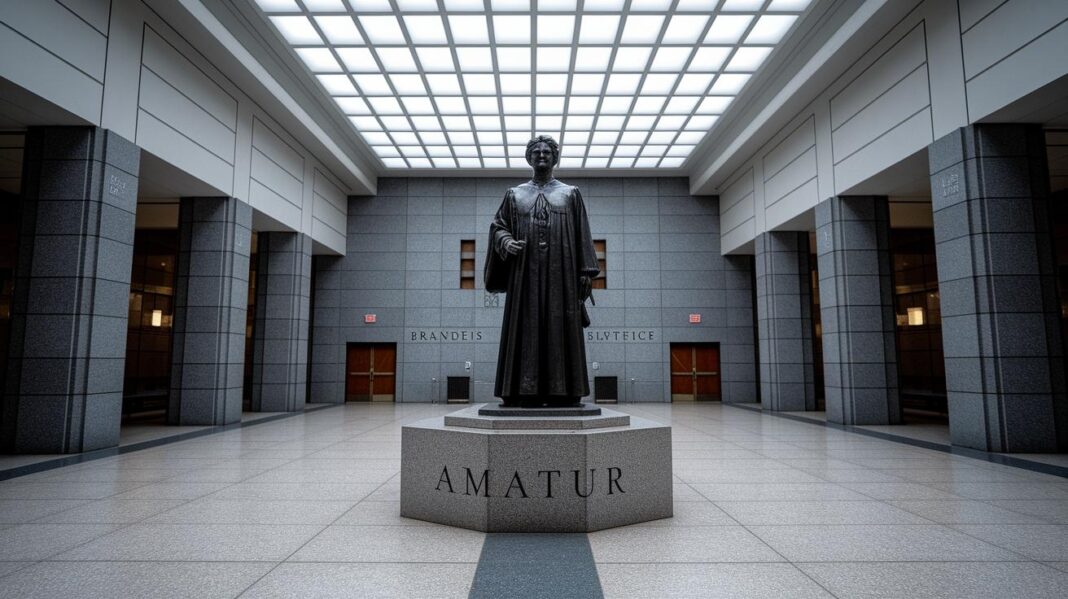

Have you ever wondered if your secrets are really safe? In 1890, Louis Brandeis argued that personal details, like conversations or letters, should stay private, much like a diary. His ideas became the foundation for the rules that now protect our digital messages.
Today, these rules help ensure that no one can peek at your chats or emails without your say-so. This article shows how Brandeis's early thoughts still guide us in keeping your digital life secure.
Understanding the Brandeis Right to Privacy

Brandeis changed how we see personal privacy. Back in 1890, he co-wrote an influential Harvard Law Review article arguing that personal conversations, letters, and other private details should belong only to you. In fact, his ideas helped set the stage for what we call the right to privacy today. Imagine an app that buzzes gently as a reminder to treat your private messages with the care of a handwritten letter.
Then, in 1927, during the Olmstead v. United States case, Brandeis took a firm stand against using warrantless wiretap evidence in court. He pointed out that our constitutional rights, like those in the Fourth and Fifth Amendments, should also protect electronic messages, just as they protect sealed letters. Think about it: you wouldn’t want someone peeking over your shoulder at your diary, would you? In the same way, no one should be allowed to access your digital conversations without your say-so.
Brandeis made it clear that privacy is not just a social nicety but a basic legal right that grows with technology. He believed that no matter how data sharing evolves, every person deserves control over their own information. His ideas still guide today’s discussions about privacy, reminding us that even in our connected world, the need to keep things personal, like your diary or smartphone chats, is as important as ever.
brandeis right to privacy Sparks Legal Clarity

Louis Brandeis was a bright spark from the start. Born in Kentucky to immigrant parents, he surprised everyone with his talent early on. At just 21, he finished Harvard Law School with top marks, a clear sign that determination can change the game.
In 1890, Brandeis helped write an important article called "The Right to Privacy" for the Harvard Law Review. This work wasn’t just academic chatter. It gave clear direction to laws about personal privacy, which still influences how we keep our data safe today. Fun fact: while at Harvard, he shattered stereotypes by topping his class, proving that youth and hard work can overturn old ideas.
His story reminds us that big ideas often start from humble beginnings. Like a gentle buzz from your phone that nudges you at just the right moment, his legacy continues to remind us why safeguarding our privacy matters in our digital lives.
Legal Foundations and Seminal Opinions in Brandeis’s Privacy Jurisprudence

Back in 1890, Brandeis wrote a law review article arguing that you should control your own private messages. He mixed clear legal reasoning with a bit of history, pushing the idea that personal privacy shouldn’t be dictated by the state. Fun fact: a young lawyer once claimed that your letters and chats should always stay out of anyone else's reach.
Then in 1927, during the Olmstead case, he doubled down on his views. He said that if anyone wanted to tap into private talks using electronic means, they should go through the same court process as with regular mail. This way, he stretched the Fourth and Fifth Amendment protections to new forms of communication, starting a debate that still matters today.
- His 1890 article set the stage by showing privacy as a right stemming from your control over personal details.
- His 1927 dissent made it clear that unchecked electronic surveillance violates constitutional rights.
Brandeis’s work reminds us to keep rethinking our privacy rights as technology pushes past old limits.
The “Right to Be Let Alone” Concept in Brandeis’s Writings

Brandeis said back in 1890 that privacy means having complete control over your own personal exchanges. He imagined everyone having a small, quiet spot for private chats, letters, and daily life moments.
Think about a calming pause. Before smartphones existed, people kept their handwritten letters as special treasures. This picture shows us that even when tech changes, the need for personal space stays important.
Brandeis’s view links old ideas with today’s challenges. Our modern devices should respect the same privacy that once comforted people in the past.
Brandeis’s Influence on Modern Privacy and Digital Rights
Brandeis’s ideas still guide the way we think about keeping our data private today. Every time you message a friend or share a photo, his push for personal control over data comes through. That little alert nudging you to check your settings? It reminds us that our digital details should stay with us unless we say otherwise.
His work fuels today’s debates on digital rights and data protection. Lawmakers, courts, and tech developers all take cues from his thoughts when setting rules about data. For example, if an app gathers your information without asking clearly, Brandeis would say that your details should only be used in ways you approve.
Imagine this: before smartphones, personal letters were guarded like treasures; now, a simple app alert shows you just how precious your online chats are. His insistence on consent shapes many digital-rights efforts today.
| Who Uses His Ideas | How They Use Them |
|---|---|
| Lawmakers | Draft rules to protect your online data |
| Court systems | Look at his views when handling cases on electronic monitoring |
| Tech companies | Create tools so you control your own information |
Every day, our gadgets, from smartphones to smartwatches, carry on his message. His early fight against unwanted intrusion now helps guide our discussion about modern surveillance tools and ethics online. It makes you wonder, doesn’t it? Are the latest tech advances truly honoring our right to privacy? Brandeis’s influence reassures us that personal consent is, and always will be, the cornerstone of privacy rights.
Ethical Dimensions and Future Prospects of Brandeis’s Privacy Principles

Brandeis’s privacy ideas are facing new tests from smart machines. For example, some health apps use AI (technology that acts like human thinking) to spot health risks. Imagine an app that figures out your health score and offers advice without even asking you first. This shows that as tech moves forward, we need better protections.
Another hot topic is how our data travels around the world. Recently, a company got in trouble when fitness tracker data was processed in another country with different rules. Picture this: your wearable's data sent overseas, sparking debates about whether it should be as private as your diary. It reminds us that our privacy ideas need an update for our global data exchange.
There are also worries about digital tools making choices for us. Think of a health app that offers treatment ideas based solely on your data. This raises concerns about fairness and whether you really agreed to these decisions. Such issues call for fresh guidelines that match today’s fast-changing tech landscape.
| Emerging Ethical Dilemma | Description |
|---|---|
| AI and Algorithmic Decision-Making | Systems may decide outcomes without asking for permission first, needing new privacy checks. |
| Cross-Border Data Flows | Data processed under different legal rules makes us ask if privacy is protected the same way everywhere. |
| AI-Driven Health Predictions | Advice that affects your health choices from automated systems calls for updated consent rules. |
Final Words
In the action, the blog took us through Brandeis's original ideas on privacy, his highlight in legal history, and the impact of his work today. It detailed his thoughts on personal solitude and the lasting influence of his landmark cases.
Each section offered bite-sized insights, showing how his passion for a truly personal space shapes the digital realm. The discussion encourages us to appreciate and protect the brandeis right to privacy in our rapidly changing world.
FAQ
What does the “Right to Privacy” article by Warren and Brandeis cover?
The article explains that individuals have control over their private lives, protecting conversations, correspondence, and personal data from unwanted intrusions.
What did Brandeis and Warren argue that the law should protect in 1890?
They argued that the law should guard personal matters like private conversations and data, ensuring that every person can live without unwarranted oversight.
What is meant by the “right to be left alone”?
This right means individuals can enjoy personal solitude, keeping their personal communications and private lives shielded from unauthorized checks.
What types of privacy are generally recognized?
Recognized types include privacy for personal data, communications, and intimate spaces, all of which allow individuals to control who sees their private information.
How can I access Warren and Brandeis’ original work?
Their influential work appears in a Harvard Law Review article, which remains a key reference in discussions about protecting privacy in legal history.