


Have you ever wondered how your wearable gently keeps an eye on your health? Today, these smart devices send little updates about things like your heart rate and sleep patterns as they happen. This smooth flow of information helps you and your care team notice any changes early so your care can be safer and more personalized.
They take raw numbers and turn them into easy trends that make sense at a glance. It’s like having a friendly reminder that you are on track. Get ready to see how linking your devices can change the way you look after yourself.
How Integration of Connected Health Devices Transforms Healthcare Systems
Connected health devices are nifty gadgets that use the internet and built-in sensors to keep track of important health numbers like your blood pressure, heart rate, sleep patterns, blood oxygen, and activity, all in real time. For example, your smartwatch might be quietly monitoring your heart rate and showing you easy-to-understand trends on a mobile app. In a connected care system, the data from these devices gets turned into clear reports that your doctor can check instantly. This smooth setup means you and your health care team can keep an eye on your condition without always needing an in-person visit.
Digital device connectivity also makes life easier for clinicians. When your health information flows automatically from your gadgets into electronic health records, it speeds up diagnosis and treatment. Doctors see straightforward reports that help them notice changes in your condition early, meaning faster reach to the right care, fewer hospital trips, and lower overall health costs.
And think about this: continuous data exchange can flag any unusual changes before they become a bigger concern. Imagine spotting a slight shift in your sleep routine or heart rate, then getting a gentle nudge on your phone to check in with your doctor. With many people now using health apps and wearables, this real-time sharing not only supports early fixes but also encourages you to take charge of your own health. In truth, linking these devices with digital health platforms marks a big step forward in making health care more centered around you.
Interoperability Standards for Integrating Connected Health Devices
Healthcare today depends on common data exchange rules that bring together info from many connected devices and link it with electronic records. These rules, like HL7/FHIR, IEEE 11073, and IHE profiles, help different systems talk to each other in a clear, familiar way. They let your imaging machines, ICU monitors, heart equipment, and even wearable sensors send their readings in a neat, consistent format so caregivers can easily review and respond.
Devices connect using local internet gateways or by sending data straight to the cloud. In simpler terms, your gadgets need to be close to a smartphone, router, or a special hub for reliable data sharing. In some top setups, a cellular connection gives an extra boost, and experts say that by 2027, there will be 61 million medical devices connected by cellular alone. That’s half of all connected devices!
Resources like Consumer Health Informatics show how these systems work together through clear, common language. It’s like having a handshake between different tech systems that makes sure everyone understands each other. This seamless linking between medical devices and record systems is key for better, on-demand patient care.
| Common Standards | Connection Methods | Benefits |
|---|---|---|
| HL7/FHIR, IEEE 11073, IHE profiles | Local gateways, cellular, direct-to-cloud | Uniform data formats and smooth system integration |
When all these parts work together, it makes a network where many devices help keep track of your health in a friendly and effective way.
Ensuring Secure Health Data Transfer in Connected Device Networks
Connected device networks need strong safeguards to protect sensitive health data. They use encrypted communications, like TLS/SSL, to create a safe channel that stops unwanted eyes from snooping in. Multi-factor authentication adds another step to check user identities, and routine firmware updates help keep the system tough against new risks. For example, imagine a health monitor that only sends patient data when it confirms the encrypted link and checks that the user is who they say they are. Such checks not only stop unauthorized access but also build trust between patients and providers.
Healthcare organizations follow rules like HIPAA, GDPR, and DSPT. These laws push them to use the best IoT security and medical cybersecurity practices so that every data piece meets global standards. Centralized platforms, like Cylera’s IoT asset intelligence system, keep an eye on cybersecurity across thousands of devices. This shows that end-to-end protection can be part of even complex health networks. Regular vendor risk assessments along with updated data privacy rules help maintain tight security. In truth, this careful approach ensures that data transfers are both efficient and well-protected from cyber threats.
Integration of Connected Health Devices Elevates Care
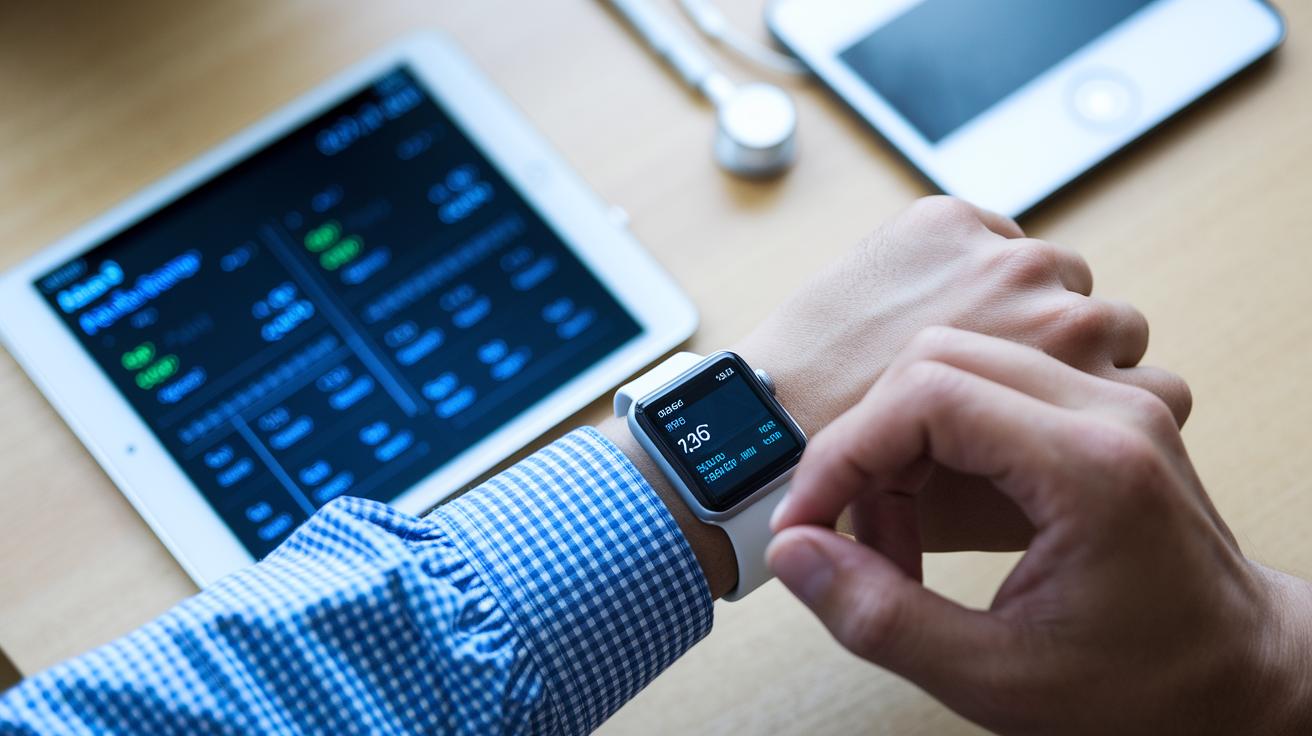
Devices now share health data using both Bluetooth and cellular networks. Many modern gadgets come with built-in LTE or 5G, so they can send your health information straight to the cloud. This simple connection turns raw sensor data into friendly charts and real-time alerts. Imagine your wearable sending your latest health updates to your doctor without any extra steps.
Different systems work in different ways. Some use local gateways like Wi‑Fi or Bluetooth hubs to pull data from a group of medical devices. Others connect directly to the cloud with fast networks like 4G or 5G. This keeps your health information seamlessly on its way to the care team.
Central management platforms do a lot of the heavy lifting, too. With remote updates, they adjust device settings, improve battery life, and check that everything is working fine. This smooth process helps your devices stay reliable and your data stay accurate.
Cloud connections also boost patient care by linking with telemedicine services. Health apps take the information and change it into easy-to-read visuals so doctors can quickly see what’s happening. It’s like having your health at your fingertips, ready for a timely check-in.
| How It’s Done | Why It Matters |
|---|---|
| Bluetooth & Cellular | Instant sharing of your health data |
| Local Gateways & Direct Cloud | Multiple ways to keep data flowing smoothly |
| Remote Updates | Ensures devices work well and last longer |
| Cloud Dashboards & Alerts | Helps doctors act quickly with telemedicine |
All these parts work together to turn connected health devices into real game changers for remote care. Isn’t it cool how a few smart systems can keep us healthier and more connected?
Real-World Implementations of Connected Health Devices in Patient Monitoring
Connected health gadgets are now a common tool in hospitals, home care, and managing long-term conditions. For example, Dexcom CGM gives patients and doctors up-to-date blood sugar info so they can spot changes quickly. Freestyle Libre shows blood sugar levels in real time and turns raw numbers into simple trends. And Google Fit ties phone sensors with wearables, making it a popular choice for daily wellness tracking.
Inside hospitals, tools like CPAP machines, ICU monitors, heart equipment, and imaging devices now send data directly to a unified screen. Ambrosia Systems uses wireless NFC and Bluetooth transmitters to deliver very precise readings, while smart thermometers, wound care sensors, and internet-connected stethoscopes help staff keep a close eye on patients. Then, platforms like Tidepool’s cloud diabetes system and Safoni-Aventis’ Ibgstar Bluetooth glucose meter automatically upload data for seamless remote care. Lifescan’s OneTouch Verio Sync with the Reveal app and Telcare’s Blood Glucose Meter paired with the Diabetes Pal app show how smart tracking can boost continuous care.
Remote monitoring lets care teams check on a patient’s health around the clock. With data streaming into easy-to-use mobile and web apps, doctors can catch small, early changes before problems grow. This connected approach makes telemedicine more reliable, helps reduce hospital readmissions, and improves overall outcomes. In short, smart and connected devices can really be a game changer for keeping care proactive and patient-centered.
Challenge Mitigation in Connected Health Device Integration
Integrating connected health devices isn’t always a walk in the park. Even strong systems hit a few bumps along the way. Challenges can include data privacy worries, the overwhelming flow of info from multiple sources, and mismatches between vendor devices that make sharing data tricky. Plus, not every patient has the same access to technology. Sometimes, unreliable devices or battery setbacks throw unexpected surprises into the mix. Picture a busy clinic where a tiny sensor glitch breaks the data chain, leaving care teams scrambling for those vital real-time updates.
- Try consistent, standardized tests that ensure each device communicates clearly.
- Use modular firmware updates that boost performance without interrupting daily routines.
- Adopt a scalable design that seamlessly handles growing amounts of data and more devices.
- Opt for vendor-neutral checks to keep systems syncing well together.
Optimizing your network is a must. Techniques like load balancing evenly spread data traffic, while edge processing handles info right where it’s gathered, cutting down on delays. Regular performance checkups catch problems early and keep the system running smoothly. Plus, training across teams and unified device rules make setup and maintenance much easier. Imagine a central dashboard that routinely monitors every device, ensuring they all communicate clearly and run without a hitch. With smart care coordination and strong governance, overcoming technical hurdles becomes a lot simpler, leading to truly reliable, patient-focused connected care.
Emerging Trends and Future Directions for Integration of Connected Health Devices
New technology is pushing our health devices to become even smarter and more responsive. Imagine carrying a tiny gadget that uses artificial intelligence (AI, which is just a fancy way of saying it learns from your data) to look after your well-being, as if you had a little health coach in your pocket. Thanks to advanced 5G networks, which move data with almost no delay, your health details can reach your doctor in almost real time.
There’s also an exciting breakthrough in predictive health analytics. This means your device might give you a heads-up when something feels off, kind of like your phone alerting you, "Hey, your sleep has changed. Maybe it’s time for a check-up." And it doesn’t end there. Soon, all the bits and pieces of your health tools, like imaging gadgets, wearable sensors, and telehealth services, will come together on one easy-to-read screen, just as simple as checking the weather on your phone.
With predictions that over 61 million cellular-connected devices will boost health monitoring by 2027, the future looks bright. Smart gadgets powered by AI will help you keep an eye on your health with care and precision, making it easier to feel good and stay connected.
Final Words
In the action, our discussion brought to life how connected health devices make managing health simple and secure. We traced the journey from real-time tracking and digital device connectivity to secure data transfer and reliable network systems. Each step highlighted the quiet power of integration of connected health devices in reducing costs and boosting care. Clear protocols, smart monitoring, and evolving tech shape a future that feels both approachable and promising. The path forward is bright, imagine a world where your health seamlessly clicks together for better everyday wellness.
FAQ
What are some examples of wearable devices in healthcare?
Wearable devices in healthcare include products like continuous glucose monitors, fitness trackers, smart thermometers, and blood pressure monitors, which collect real‑time health metrics to guide proactive care.
How does interoperability work for medical devices?
Interoperability for medical devices means that different devices speak a common language using data standards and protocols, allowing them to exchange and interpret health data seamlessly.
What are the benefits of wearable devices in healthcare?
The benefits of wearable devices in healthcare include real‑time health monitoring, cost reduction, early intervention, and streamlined patient management by providing timely insights via sensors and mobile apps.
What are some top wearable health devices?
Top wearable health devices include continuous glucose monitors like Dexcom CGM, blood sugar trackers such as Freestyle Libre, and smartphone‑based platforms like Google Fit, which deliver daily health insights.
What does the future hold for wearable technology in healthcare?
The future of wearable technology in healthcare involves AI‑driven analytics, robust 5G connectivity, and enhanced real‑time patient monitoring, leading to more personalized and efficient care.
What career opportunities exist in medical device integration?
Medical device integration jobs focus on coordinating connected devices, managing data flows, ensuring cybersecurity, and meeting regulatory standards, making them essential to modern healthcare systems.
How does FDA regulation affect medical device interoperability?
FDA guidelines for medical device interoperability ensure that devices securely share patient information while abiding by strict safety and performance standards across healthcare systems.
What are some disadvantages of wearable technology in healthcare?
Disadvantages of wearable technology can include device reliability issues, limited battery life, privacy concerns, and challenges in maintaining compatibility across different systems.
What is medical device integration and how does it work?
Medical device integration links devices with digital systems so that patient data flows smoothly across health services, improving monitoring, diagnosis, and overall care efficiency.
What challenges remain in medical device integration?
Three key challenges in medical device integration are managing data privacy and security, bridging gaps between different device protocols, and handling massive volumes of data efficiently.