
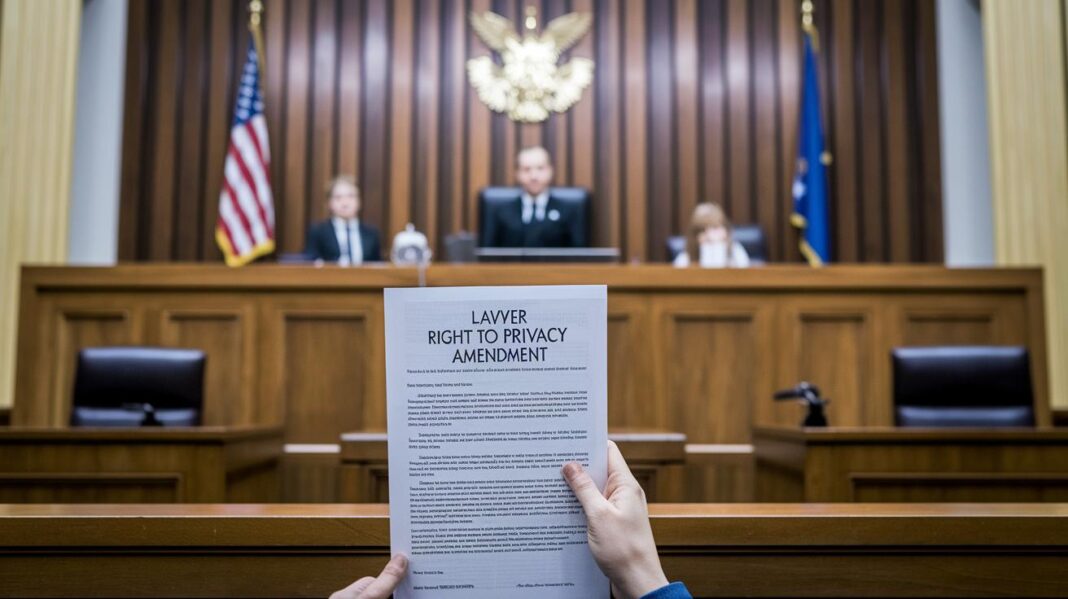

Ever wondered if your digital life is really private? A new right to privacy amendment might just be the modern lock we need to keep our personal information safe. Old laws were made for paper records and diaries, not for smartphones that track every tap and swipe.
This update brings in clear rules that protect the huge amount of data we create every day. In this article, we take a closer look at how this change boosts legal insight and offers fresh, trustworthy protection for everyone in our data-driven world.
Why a Right to Privacy Amendment Is Necessary
The Fourth Amendment is what helps keep our privacy safe. It makes sure police get a warrant based on a good reason before they search or take anything. Cases like Riley v. California in 2014, which protected our cell-phone data, and Carpenter v. United States in 2018, which extended these rules to our past location data, show that our courts know privacy needs to keep up with today's world. Think of it like comparing a locked diary to hundreds of digital notes floating around online.
Our digital lives are different now. Every tap and swipe creates more data about us, from pictures to location histories. The old Fourth Amendment was meant to protect physical papers and items, not the huge amount of digital information on smartphones and cloud systems we use today.
A right to privacy amendment would set clear rules for both government and business to follow, making sure our digital information is protected. It would update our laws to match the reality of today’s data-driven world. For more on privacy basics, you can check out the "Information Privacy" page.
Right to Privacy Amendment Boosts Legal Insight

Privacy rights got their start with the Fourth Amendment, which grew out of old English common law. In the early days, the law was all about protecting physical things you could touch. But as the 1900s rolled in, people began to believe in a right to be left alone, even though the word "privacy" never showed up in the Constitution. For example, when diaries were safely locked in a chest instead of stored in digital clouds, it meant you were guarding tangible personal items.
Then, as time went on, court decisions in the mid-century started to include personal matters like marriage, contraception, and family planning. Still, today's digital world, with smartphones, cloud storage, and ever-changing online habits, brings new challenges that old laws never imagined. Now, many experts think it's time to update our legal rules to protect our digital lives. They argue that our privacy needs constitutional backing that fits our modern world, keeping pace with how we communicate and store our personal information.
Judicial and Legislative Debates on the Right to Privacy Amendment
Privacy is a hot topic these days, with courts and lawmakers rethinking how we protect our personal information. In one case, O.W. v. Carr, judges made it clear that digital surveillance lacks strict rules. This means our data can be tracked too freely. Then, in Seymour v. Colorado, search warrants using reverse-keyword methods were called into question for stretching their limits. Meanwhile, Tuggle v. United States brought up concerns about long-term, secret home monitoring and its impact on everyday privacy.
EPIC stepped up by filing briefs to back rules that keep intrusive surveillance in check. They’ve been busy commenting on agency guidelines and sharing thoughts on new legislative drafts. Their push shows a real worry about how digital data gets handled, and it’s a call to update laws so they match today’s technology.
Back in December 2024, EPIC stirred things up by asking the Office of Management and Budget to fix loopholes that let data brokers use and share personal data without proper oversight. And then, in August 2024, the Fifth Circuit ruled that geofence warrants aren’t allowed by law. This decision really highlighted judicial doubts about broad digital surveillance, showing that it's time to rethink our legal standards.
All these debates show how challenging it is to maintain privacy in the digital age. They also reveal a determined push by legal experts, advocates, and lawmakers to update the rules that shape our private lives.
Digital Age Challenges to a Privacy Amendment

Modern technology hits us with more data than ever before. Our smartphones, cloud computing, and AI analytics (tools that help us make sense of large amounts of data) constantly gather personal information like our biometrics, location, and private communications. Imagine your phone recording every tap and swipe, building a careful picture of your day. This surge in digital data goes way beyond the old idea of protecting “papers and effects,” making it hard for our current Fourth Amendment rules to keep up.
Both businesses and government agencies now use AI for things like tracking online activity and predicting trends. This means data collection is cheaper and happens more often. It makes us wonder about the balance between government surveillance and our privacy. Think of an algorithm sorting through billions of data points with minimal oversight. Meanwhile, data brokers trade huge amounts of personal details without clear rules or transparency.
Privacy groups like EPIC are stepping in to take on these issues. They work on challenges in criminal justice, AI oversight, and data security. It’s a bit like comparing a simple door lock to a high-tech security system designed to fend off online attacks. They remind us that as our ways of keeping an eye on things change, our legal protections must evolve too.
Laws across different states vary a lot when it comes to digital data threats, leaving many gaps. A federal amendment could bring everyone under one safe umbrella, making sure all of us enjoy strong privacy rights no matter where we live.
Key challenges include:
- A mismatch between the amount of digital data we produce and the protections originally imagined.
- The rapid rise of advanced technologies without updated legal safeguards.
- Inconsistent state-level laws that leave privacy rights patchy.
Many see this as a call to reform privacy laws. Modern language in any amendment should clearly address data protection. This way, everyone’s privacy can keep up with our ever-changing digital world.
We need to rethink how we handle our digital lives. It’s about creating a system that feels as secure as a trusted friend watching out for you, every step of the way.
Future Directions for Privacy Amendment Reform
Some new ideas for a privacy amendment call for very clear, easy-to-understand rules. The suggestion is to give you full control over your personal data while adding strong security measures. Experts say we need a balance, making sure your privacy is safe without stopping police from doing their jobs. Think of it like clear, step-by-step instructions in a health app that shows you exactly how your data is handled.
Advocacy groups are working hard to bring everyone together, no matter where they stand politically. They’re busy drafting sample amendments and running education campaigns to help everyone understand the issue. Their work focuses on:
- Setting up clear rules to protect your data
- Explaining when and how police can use digital evidence
- Helping the public see why our right to privacy is so important
In truth, these efforts are a strategic move to make privacy a basic right for every single one of us. As technology grows and changes, our laws need to keep up so that we all stay safe.
Final Words
In the action, we explored how modern technology challenges old rules and why a right to privacy amendment is more crucial than ever. We traced the evolution of privacy protections from physical papers to digital data, examined debates sparked by major court cases, and looked at future paths for reform. The discussion brings us closer to a secure digital world where privacy remains a priority. The idea of a right to privacy amendment sets the stage for clearer protections that adapt to our digital lives. Stay hopeful and engaged.
FAQ
What does the Fourth Amendment mean in simple terms?
The Fourth Amendment means police need a valid warrant backed by reason to search or seize your property, which gives you basic privacy protection against unjustified intrusions.
What is the right to privacy?
The right to privacy means you have the freedom to keep your personal information and space free from unwarranted government or commercial intrusions, a concept backed by landmark court cases and ongoing legal debates.
How has the government worked to protect the right to privacy?
The government protects privacy by requiring warrants for searches and setting rules for digital data access, as seen in cases like Riley v. California and Carpenter v. United States, though challenges in technology keep the debate alive.
Is the Fourth Amendment the same as a complete right to privacy?
The Fourth Amendment offers key privacy protections through legal limits on searches, but its language was not designed for modern digital data, prompting calls for new, clearer privacy laws.
What is an example of a violation of the right to privacy?
An example is when someone accesses your personal digital information without a warrant or proper safeguards, which breaches your constitutional expectation of privacy.
How do the 3rd, 5th, 6th, and 14th Amendments relate to privacy rights?
These Amendments address issues like fair trials and protection from government overreach; however, they don’t provide complete privacy coverage, leaving gaps that call for a dedicated privacy amendment.