

Have you ever wondered if your data is really safe when it crosses the ocean? On July 10, 2023, a new deal between the EU and the US laid out clear rules for moving your personal information between continents. Companies following these new guidelines promise to protect your data the same way European rules demand. This clear approach makes it easier for both businesses and individuals to know what's expected and builds trust when your info goes overseas. Let’s take a closer look at how this framework helps keep your details secure.
EU-US Data Privacy Framework Explained
On July 10, 2023, the EU-US Data Privacy Framework came into effect, ending a three-year period of uncertainty since the Privacy Shield was scrubbed in 2020. Now, companies that follow the EU's rules (GDPR) can send personal data to U.S. firms that promise to protect your information just as well as European standards require. The U.S. Department of Commerce runs a self-certification program where businesses can prove they’re on the straight and narrow. Think of it as a company proudly saying, "We stick to these strict data rules, and here's the proof."
But this framework isn’t a free pass to send data anywhere. It still sticks to EU limits to make sure that data moving across the Atlantic stays safe and secure. There are clear legal rules in place, and if companies slip up, they can face fines as high as 4% of their global earnings from the previous year. This shows just how serious these rules are, and regular reviews help keep everything on track.
The EU-US Data Privacy Framework also acts like a transatlantic safety net. Businesses are required to update their data practices, refresh privacy policies, and tighten security measures. This way, you continue to have control over your personal data, while companies enjoy clear guidelines for keeping your information secure as it moves between continents.
EU-US Data Privacy Framework Origins and Evolution
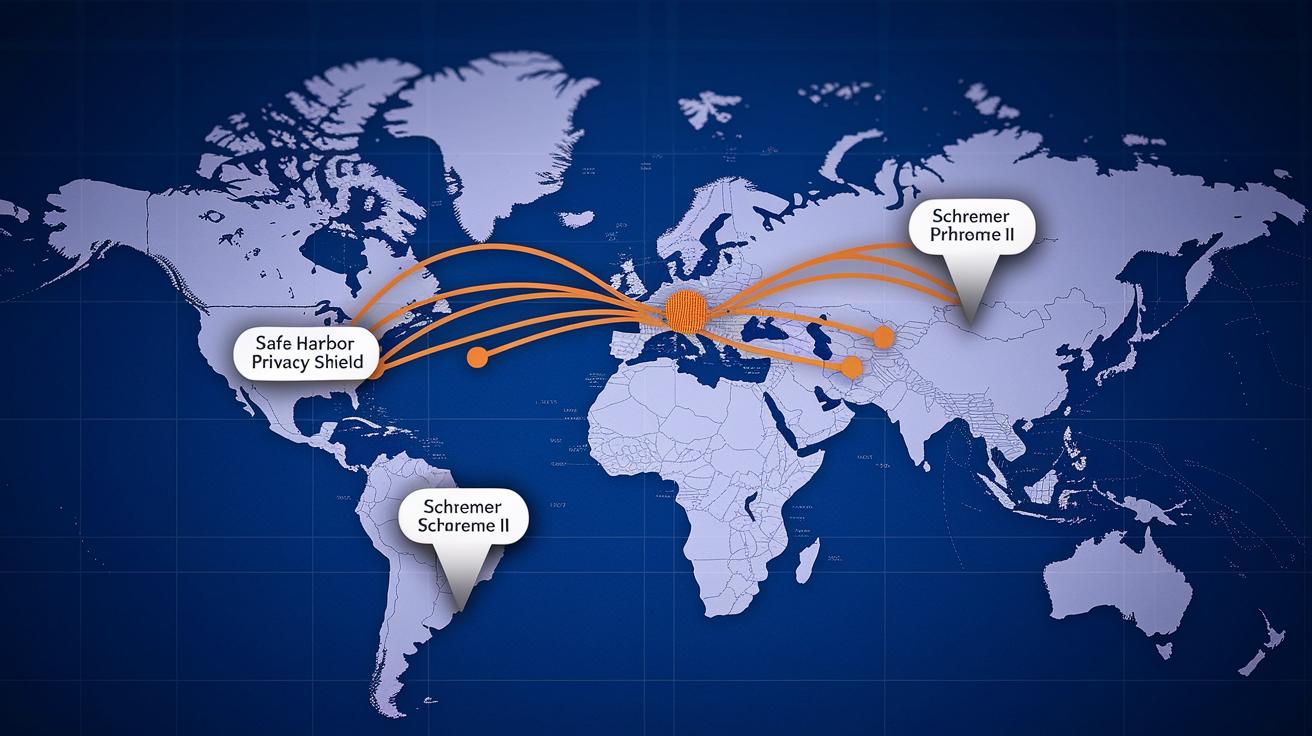
When we look back at transatlantic data privacy, you'll notice a slow but steady build-up to today’s framework. Back in 2000, the Safe Harbor Agreement let U.S. companies say they followed EU privacy rules. It was a simple start, a small step that went a long way in building trust by saying, "We respect your data."
In July 2016, the EU-US Privacy Shield stepped in to replace Safe Harbor. It came with tighter rules and made companies more answerable for handling European data. Then, in July 2020, the Schrems II ruling shook things up by invalidating the Privacy Shield and questioning the strength of Standard Contractual Clauses. This decision made everyone rethink how to safely manage data transfers.
Next, in March 2022, the EU and U.S. reached an agreement in principle on a new framework. This set the stage for fresh ideas in data protection and oversight. Finally, on July 10, 2023, the European Commission officially adopted the new EU-US Data Privacy Framework. Now, companies on both sides of the Atlantic follow strict privacy rules, renewing trust and boosting protection.
| Date | Event |
|---|---|
| 2000 | Safe Harbor Agreement allowed U.S. companies to self-certify compliance with EU privacy rules |
| July 2016 | EU-US Privacy Shield replaced Safe Harbor with tighter rules and better accountability |
| July 2020 | Schrems II decision invalidated the Privacy Shield, challenging the reliability of Standard Contractual Clauses |
| March 2022 | Agreement in principle reached on a new data privacy framework |
| July 10, 2023 | European Commission officially adopted the new EU-US Data Privacy Framework |
Core Principles and Standards of the EU-US Data Privacy Framework

Deep down, seven key ideas guide how personal data is handled and protected. They help companies meet worldwide privacy rules and keep digital info safe every day. In short, these ideas mean firms only collect what they truly need, use data only for the reason it was gathered, and keep it only for as long as necessary.
Companies need to update their privacy policies so they clearly show these standards. For example, a business might say, "We only store your info for as long as it's needed and protect it with strong security measures." This clear approach helps you understand exactly how your data is used, and it makes sure that strong safeguards stop any unwanted access.
Plus, even when your data moves across borders, these same strict rules still protect it. The framework also gives you more control over your personal information. To keep things fair, a Data Protection Review Court has been set up to look into any complaints about U.S. intelligence access. And companies must offer easy-to-use ways for you to get help or answers, usually within 45 days.
Compliance Steps under the EU-US Data Privacy Framework

If your company needs to send personal data across the Atlantic, you’ve got to follow a few key steps by October 10, 2023. Each step builds a strong foundation for handling data safely and sticking to cross-border rules.
- Get Self-Certification from the U.S. Department of Commerce
- Update Your Privacy Policy to Mirror the Framework
- Set Up Easy Ways for People to Voice Their Concerns
- Create Clear Procedures for Data Deletion or Return Once It's Not Needed
- Keep Detailed Records for Ongoing Compliance Checks
- Train Your Team on Cross-Border Data Protection and GDPR Rules
Finishing the self-certification means your company officially confirms it meets the framework’s strict privacy rules. This is key because it shows the Department of Commerce that you’re ready to treat EU data with the care it deserves.
Next, make sure your privacy policy is crystal clear. Instead of vague language, you might say something like, "We keep your personal data only as long as necessary and protect it seriously." This honest approach helps everyone understand how their data is handled.
Providing simple ways for individuals to raise concerns means that if issues pop up, there's a clear route to get answers, often within 45 days. And when data is no longer needed, having set methods to delete or return it shows extra care. Meanwhile, good record-keeping backs up your efforts during audits, and training your staff means everyone understands the ins and outs of keeping data safe across borders.
Enforcement, Oversight, and Review of the EU-US Data Privacy Framework

The U.S. Department of Commerce takes care of self-certification. Companies must regularly prove they’re sticking to strict data rules, or they could pay fines up to 4% of their global earnings. For example, if a company fails an inspection, it might face a heavy penalty.
Meanwhile, the Federal Trade Commission and the Department of Transportation act as behind-the-scenes investigators. They dig into cases to spot any issues that might be missed.
There’s also a special court called the Data Protection Review Court. It listens to complaints about U.S. intelligence access and can enforce fixes when needed.
Every year, companies must recertify to show they’re still in compliance. This regular check-in helps build a solid, ongoing promise to safeguard your data.
Transatlantic Extensions and Future Outlook of the EU-US Data Privacy Framework

On June 8, 2023, the UK introduced its own upgrade called the Data Bridge. This lets companies send data between the UK and the US under the same rules set by the EU framework. It’s a safe way to transfer information while keeping privacy secure. Then, on July 17, 2023, Switzerland followed suit with its new Swiss-US Data Privacy Framework. This change made it easy for businesses using the old Swiss-US Privacy Shield to join the updated plan.
These moves show that the data protection rules are growing beyond Europe. More countries can now enjoy the benefits of strong cross-border privacy. And, they set a good example for future deals. Still, legal disputes that popped up right after the decision mean that some uncertainty lingers. People are wondering if these changes will really last over time.
There might be changes to Standard Contractual Clauses too, as judges and lawmakers take a closer look. The European Data Protection Board is expected to clear up these questions soon. That means companies should keep an eye on their current practices and be ready to make changes when new rules arise.
Regular reviews of these decisions are also coming up. This gives everyone a chance to tweak the agreement and stay in step with new challenges in data protection. For instance, one business might say, "We are ready to adjust our practices with each new review, staying ahead of changes in privacy laws."
Final Words
In the action, we reviewed how the eu-us data privacy framework evolved and its role in helping protect your data. We discussed its key milestones, core principles, and the steps companies need to follow for compliance. The overview also shed light on enforcement measures and transatlantic expansions, giving you the insight needed to understand cross-border data protection. This framework sets a solid base for a secure future in digital health, making the way forward a little brighter for everyone.
FAQ
What is the EU-US Data Privacy Framework and what did it replace?
The EU-US Data Privacy Framework is a set of standards that lets companies transfer personal data between the EU and the U.S. securely. It replaced the Privacy Shield to meet EU protection requirements.
How does the EU-US Data Privacy Framework differ from U.S. data privacy standards?
The framework follows strict EU guidelines like limited data collection and clear usage rules, unlike traditional U.S. practices. This approach ensures that personal data gets comparable protection on both sides of the Atlantic.
How do companies certify under the EU-US Data Privacy Framework?
Companies certify by self-attesting compliance with the framework through the U.S. Department of Commerce. They must update privacy policies and set up redress mechanisms so individuals can easily address data concerns.
What are the key requirements of the EU-US Data Privacy Framework?
The framework requires companies to limit data collection, define a clear purpose, follow set retention rules, maintain transparency, and ensure robust security safeguards alongside accountable data transfer practices and accessible redress options.
What role did the Schrems decisions play in shaping the EU-US Data Privacy Framework?
The Schrems cases led to more rigorous controls on U.S. data transfers. This framework now includes independent review measures for U.S. intelligence access to strengthen individual data rights.
Where can I find the official documentation on the EU-US Data Privacy Framework?
Official guidelines are available in PDF format from the U.S. Department of Commerce and can be summarized on reputable sources like Wikipedia, providing a clear history and step-by-step framework details.
Which companies are listed under the EU-US Data Privacy Framework?
A list of companies meeting the framework’s strict criteria is maintained by regulatory bodies. These companies have shown they comply with data protection standards set to safeguard EU personal data during transfers.